Arcade games have long been synonymous with the clinking of quarters and the rush of excitement as players attempt to get the most out of each coin. However, hidden within many arcade cabinets is a feature that eliminates the need for payment altogether: the “free play” setting. This option allows players to enjoy games without inserting money, and its history is deeply intertwined with the evolution of arcade gaming itself.

The Early Days of Coin-Operated Machines
The first coin-operated amusement devices emerged in the late 19th and early 20th centuries. These early machines were mechanical rather than electronic, offering simple forms of entertainment like fortune telling or strength testing. With the advent of electromechanical and early video arcade games in the 1970s, the coin mechanism became an essential part of the industry, fueling the rapid expansion of arcade culture.
Before the introduction of a dedicated free play setting, arcade game owners and manufacturers needed a way to test machines without constantly inserting coins. In many cases, operators would manually trip coin mechanisms or use special keys to trigger credits. This informal approach led to a desire for a more structured way to play without inserting money.
Mike and David (The 8-Bit Guy) both remember an arcade in Arlington, TX in the early 1990s that would occasionally have an unlimited-play night. They would spend hours opening every arcade machine, setting all of the games to free play, and then after the event spend hours setting them all back to pay-per play.

The Birth of the Free Play Setting
As arcade technology advanced, developers recognized the need for a built-in feature that would allow arcade owners, technicians, and even players in specific settings to enjoy games without using real money. The free play setting was first introduced as an option within the game’s internal service menu, which could be accessed by operators for testing, maintenance, and adjustments.
During the golden age of arcade gaming in the late 1970s and early 1980s, companies such as Atari, Williams, and Bally Midway started including free play options in their arcade cabinets. This was particularly useful for testing and for use in home use, or non-commercial settings, such as trade shows, competitions, and game development studios.
These settings could be changed on many retro games via DIP switches on the arcade’s game board. Where with modern arcade games, pinball machines, and crane machines this is done via a service menu in the games software configuration.
Free Play and the Home Arcade Revolution
While free play was initially designed for operators and technicians, its role expanded significantly as home arcade machines and collector markets grew. In the late 1980s and 1990s, arcade enthusiasts began acquiring original cabinets for private use, where the ability to play without inserting coins became a necessity.
With the rise of arcade-to-home console ports, manufacturers also started adding free play modes as unlockable features or built-in settings for players who wanted an authentic arcade experience without the hassle of inserting credits. Emulation software, such as MAME (Multiple Arcade Machine Emulator), further popularized the concept of free play by allowing gamers to access thousands of arcade titles without requiring physical coin mechanisms.
Free Play in Modern Arcade Culture
Despite the decline of traditional arcades, free play remains an essential feature in various forms of modern gaming. Many arcade bars and retro gaming venues now operate on a pay-per-entry model, where customers pay a flat fee for unlimited access to games set on free play. This model has proven to be successful, allowing players to enjoy classic and modern arcade games without the constant need to insert money.
Events such as gaming expos and arcade conventions frequently utilize free play settings to attract attendees and promote gaming culture. High-score competitions, speedrunning events, and game showcases often rely on free play to ensure participants can focus on gameplay without being restricted by coin limitations.

Hacks
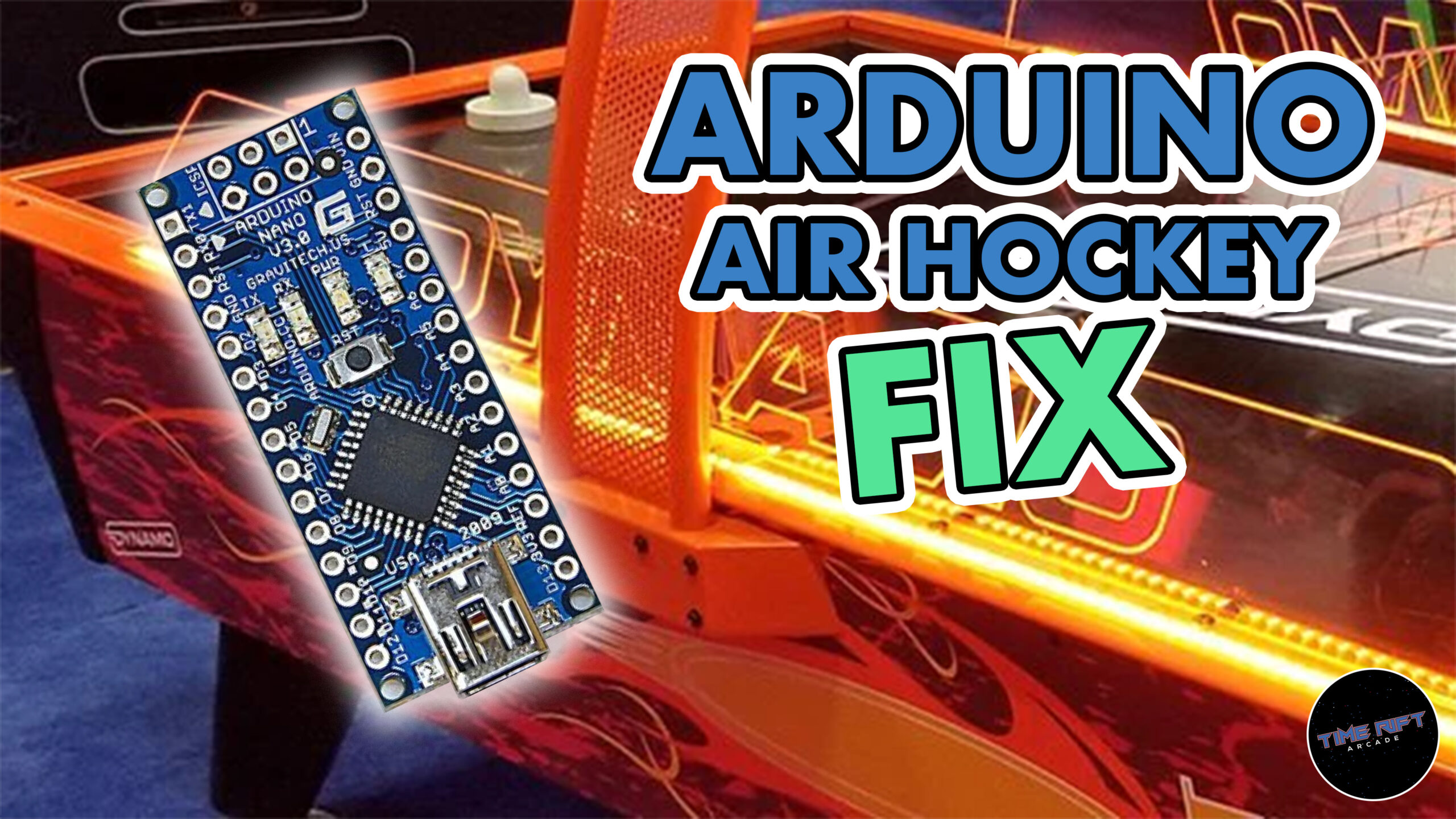
Some games never had free play options, and some modern games to this very day still don’t have the option! For example, we added a free play button using an Arduino on the Valley-Dynamo Air Hockey table at the Time Rift Arcade in Bedford, TX.
For many games, the answer is simply to add a button on the outside of the cabinet that once pressed adds a credit to the game. This is accomplished by wiring the button directly to the coin sensor switch on the the coin door or JAMMA harness. At the Time Rift, we also add a sticker that instructs customers to press the credit button to add credits.
The Legacy of Free Play
The concept of free play has evolved alongside the arcade industry, serving different roles for different audiences. What started as a tool for technicians and operators has become an essential feature for collectors, enthusiasts, and businesses.
Today, many arcades, including the Time Rift Arcade have all of their games set to free play. You simply pay a single admission price at the door and then you can play as many games as you like while at the arcade. The first arcade to set all of their games to free play mode, and charge admission is believed by most people to be the Galloping Ghost in Brookfield, IL. Galloping Ghost opened in 2010 with a $10 admission charge.